
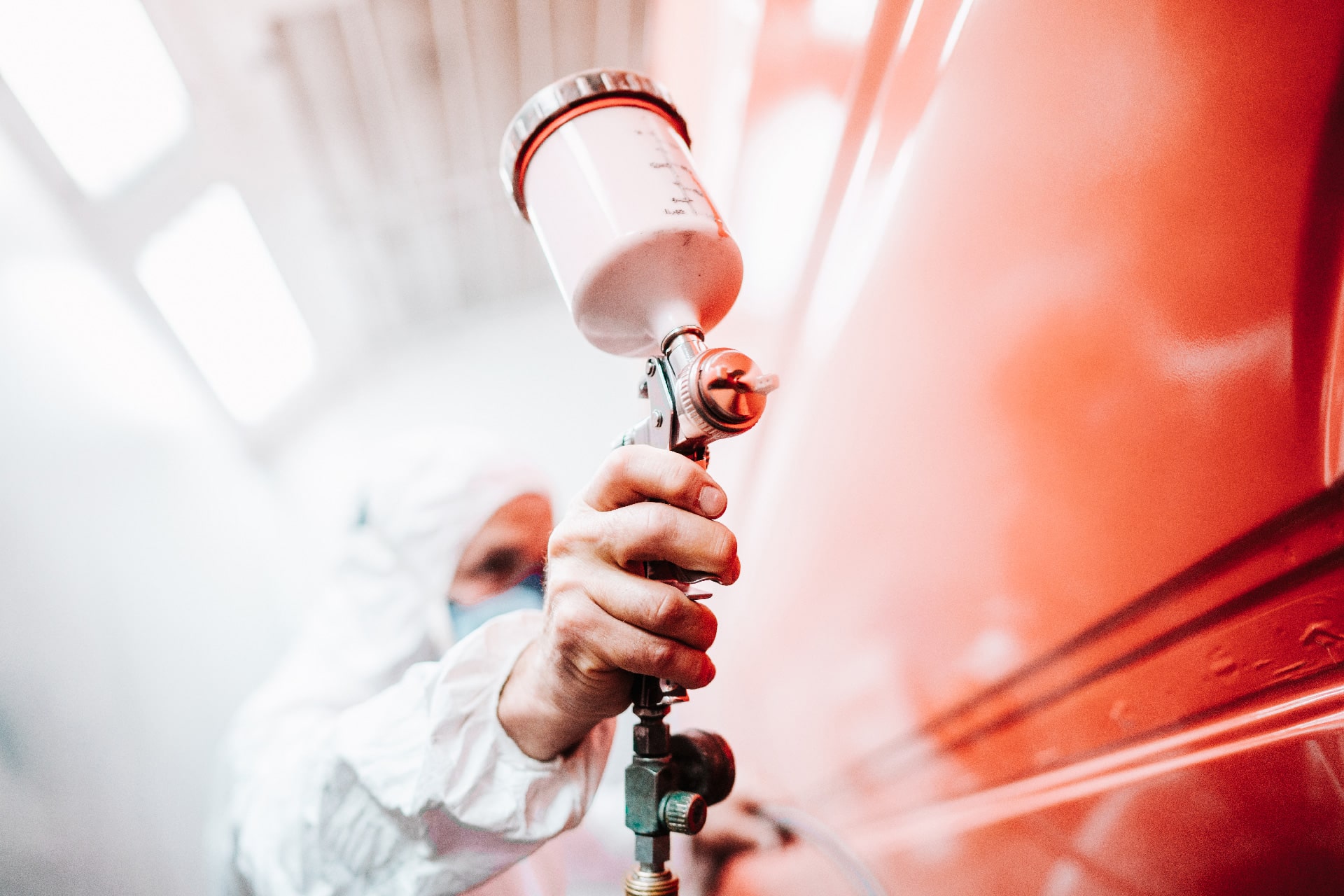

Achieving a seamless paint finish in auto body repair requires more than matching a color code. This blog explains how refractive index, light behavior, and spectrophotometer technology work together to create accurate results. It also highlights the impact of aging paint and why precision adjustments are necessary for an invisible repair.
Key Takeaways
- Light behavior and refractive index affect paint appearance
- Spectrophotometers improve accuracy beyond visual matching
- Aging paint requires custom adjustments for seamless repairs
When you think about auto body repair, one question usually pops up right away. Will the paint match or not? It sounds simple at first. There’s a factory color code, so in theory, the job should be straightforward.
But once you look at real vehicles, that assumption starts to fall apart.
You might see a car that looks perfectly fine during the day. Then at night, under streetlights, something feels off. Not drastically wrong, just enough to notice. That shift is not random. It comes down to something called metamerism. In simple terms, the paint reacts differently depending on the light source.
This is exactly where many auto body repair challenges begin, especially when the goal is to achieve a finish that looks identical across all environments. If you are not familiar with paint matching optics, this can be confusing. Hence, achieving an invisible finish is not just about choosing the right color. It is about how that color behaves when light hits it.
What Is Really Happening on the Surface
It helps to stop thinking of automotive paint as a single layer. It is not. It is a stacked system, and each layer plays a role in shaping the final result.
| Layer | Role |
| Primer | Stabilizes the base and affects how light is absorbed |
| Base Coat | Holds the pigments and metallic elements |
| Clear Coat | Controls gloss and how light reflects back |
Now here is where things get interesting.
When light hits the surface, some of it is reflected immediately. The rest goes deeper. It passes through the clear coat, interacts with pigments, and bends slightly as it passes between layers with different refractive indices.
That bending matters. A lot.
As a result, even slight inconsistencies can be observed visually. The faintest change in the location of the metallic flakes, or in the thickness, may change the manner in which the light is reflected to your eye. Because of this, two panels with similar color codes need not look the same.
Where Traditional Matching Runs Into Trouble
Older repair methods relied heavily on matching formulas and visual checks. For basic finishes, that worked reasonably well.
Modern finishes are not similar. Metallic and pearl paints are more susceptible. The surface’s appearance can change with variations in the arrangement of tiny particles in the paint layer as the angle and lighting change. The overall appearance may be inappropriate even in the right color.
This is usually where things go wrong. Matching color alone does not guarantee a match in real conditions.
Why a Spectrophotometer Changes the Process

This is where technology steps in. A spectrophotometer does not just “look” at the color. It measures how light reflects from the surface at different angles. That gives a much clearer picture of what is actually happening.
Instead of guessing, technicians can see:
- How pigments are layered
- How metallic flakes are oriented
- How the surface reacts under different lighting angles
At Relux Collision, this kind of data is part of the normal workflow. The focus is not just on getting close visually. The goal is to match how the paint behaves, not just how it looks in one condition.
That difference is what makes a repair blend in rather than stand out.
The Problem Most People Overlook: Aging Paint
There is another layer to this that often gets missed.
Paint does not stay the same over time. Sunlight, UV exposure, and weather all slowly change the surface. This is what people refer to as solar fade. The color might lose a bit of depth. The gloss might shift slightly. It is subtle, but it adds up.
Now think about what happens during a repair. If you use the original factory formula on a car that has aged for years, the new paint can look fresher than the rest of the vehicle. Technically correct, but visually off.
So adjustments have to be made. Instead of relying solely on the original code, technicians tweak the formula to match how the car looks now. That might involve small pigment changes and checking results under different lighting before final application.
Without that step, the repair can be noticeable, especially in daylight.
What Actually Makes a Repair Invisible

At this point, it becomes clear that an invisible finish is not about one single factor.
- It is a combination.
- The color has to match.
- The light reflection has to match.
- The surface texture has to match.
Miss one of these, and the difference shows up.
That is why the process usually includes scanning the surface, adjusting the formula, and blending the paint carefully into surrounding panels. When everything lines up, the repair disappears into the original finish.
Conclusion: Precision Matters More Than Just Color Codes
When it comes to auto body repair, using the factory color code is only the starting point. Real accuracy comes from understanding how light, materials, and time all affect the final result.
At Relux Collision, we focus on exactly that. Our team uses advanced spectrophotometer technology, along with practical experience, to deliver paint matching that holds up in real-world conditions, not just under one type of light.
With over 30 years of experience, we handle everything from minor paint corrections to full collision repairs. We also work directly with major insurance companies, so the process stays simple for you from start to finish.
If you want your vehicle repaired in a way that actually blends in, not just looks close, then getting a quote from Relux Collision is the right step. This is where precision meets experience, and where the results speak for themselves.