
A Complete Guide to Seamless Auto Body Repairs
If you have ever wondered what is paint blending and why body shops talk about it so often, this guide is for you. Paint blending is one of the most important parts of modern collision repair. It is also one of the most detailed and skill driven processes in the entire refinish job. When done correctly, paint blending makes damage repairs disappear. When done poorly, the repair stands out every time the light hits your car. At Re Lux Collision, paint blending is treated as both a technical process and an art, because your vehicle deserves a flawless finish that looks right today and years from now.
What Is Paint Blending in Auto Body Repair?
Paint blending is the controlled technique of extending new paint from the repair area into the surrounding panels so the colour transition cannot be seen. Instead of stopping the paint at a hard edge, the technician gradually blends the new color outward. This blending technique allows the eye to read one continuous colour across the vehicle.
Paint blending is not about covering damage only. It is about matching paint colors so well that the repair area cannot be detected. Even when the correct paint formula is mixed, new paint can look slightly different than original paint due to age, sun exposure, and environmental wear. Blending solves that problem by creating a smooth transition between the newly painted area and the existing finish.
Why Paint Blending Is Necessary After a Collision
Factory paint vs new paint
Factory paint changes over time. Sun exposure slowly alters colour and gloss. Washing habits, road debris, and weather all affect how paint ages. New paint has none of that history. Even a perfect mix can look slightly off when sprayed next to original paint.
Why paint codes do not always match
Paint codes provide a starting point, not a guarantee. Manufacturers often have multiple shades within the same colour code. Metallic and pearl finishes add even more complexity because flake orientation changes how light reflects at different angles.
What happens if blending is skipped
Skipping blending can leave a visible edge at the repair area. The panel may look fine indoors but stand out in sunlight. Over time, mismatched paint can hurt the vehicle’s appearance and resale value. Proper blending helps avoid these issues.
How the Paint Blending Process Works
Step 1: Color analysis and matching
The blending process begins with analysing the existing colour on the car. Technicians compare shades, metallic content, and gloss levels to select the best match. Mixing paint often involves small adjustments to achieve the closest possible match.
Step 2: Surface preparation
Surface preparation is critical. The panel and adjacent panels are cleaned, sanded, and feathered. Masking is used to protect areas not being painted while leaving enough room for the blend paint. Before applying paint, the surface is wiped thoroughly to remove dust and oils. Applying a primer to the repair area ensures better adhesion and durability of the new paint.
Step 3: Applying the base coat and creating the blend
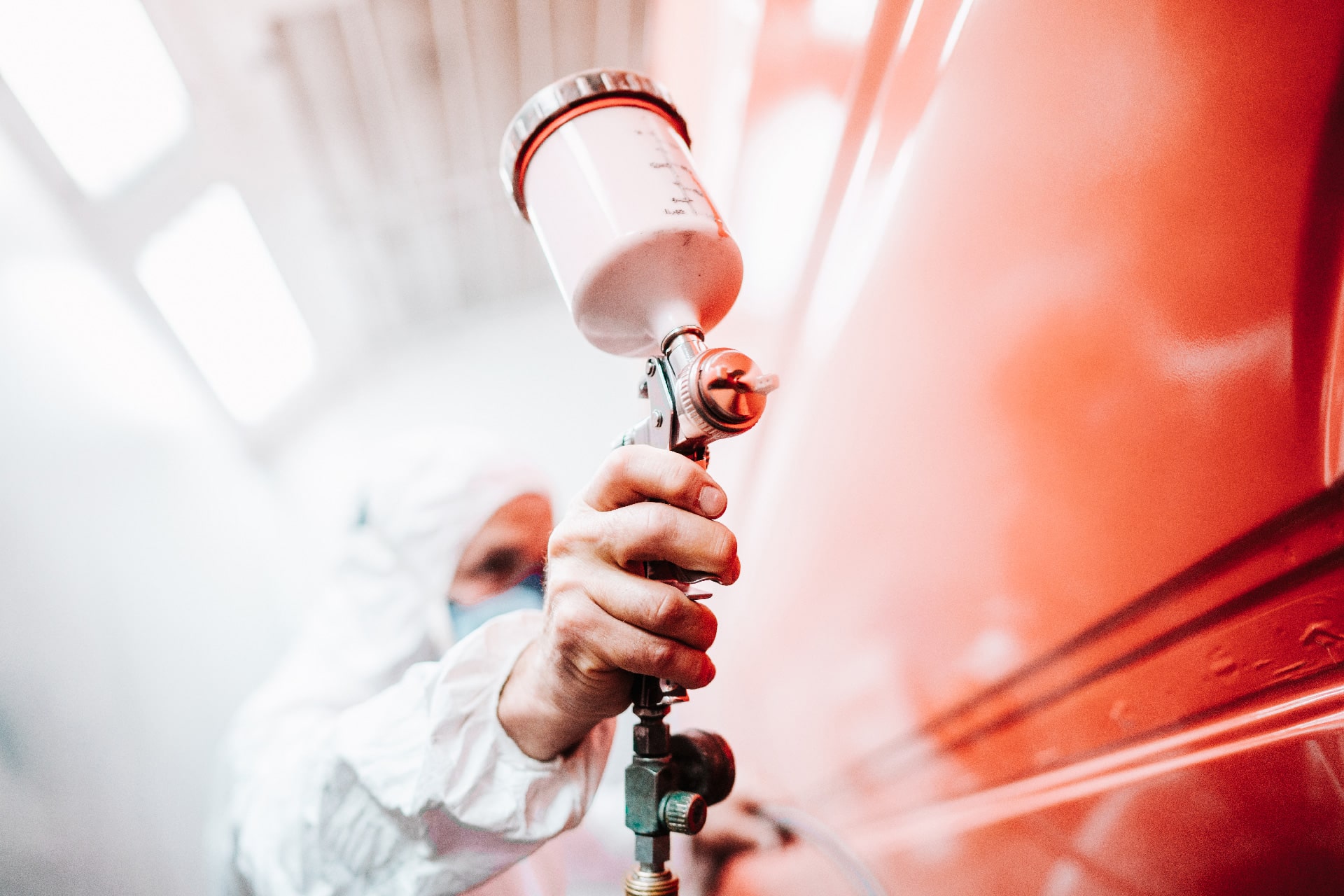
The first coat of base paint is applied to the repair area. As the painter moves outward, the paint is sprayed in a thinner application using a circular motion. This technique allows the colour to gradually fade into the surrounding panels without a visible line. A key tip is to avoid hard edges by starting the spray slightly before the repair area and continuing slightly beyond it to stick the new paint seamlessly with the original finish.
Step 4: Clear coat application
Clear coat protects the colour and provides gloss. It is applied evenly to ensure durability and consistency. Proper clear coat application is essential to prevent peeling, texture issues, or uneven shine.
Step 5: Curing, sanding, and polishing
After curing, the surface may be wet sanded and buffed to refine texture and gloss. This step helps achieve a flawless finish and ensures the blended area matches the rest of the vehicle.
Which Repairs Typically Require Paint Blending?
Common scenarios
Paint blending is common on door repairs, front fender damage, quarter panels, and bumper adjacent areas. Repairs near a front door or rear door often require blending into the next panel to avoid visible colour changes.
Paint types that almost always require blending
Metallic, pearl, silver, and dark paint colors are especially sensitive. These finishes reflect light differently depending on spray angle and film thickness, making blending necessary for a proper match.
Does Paint Blending Mean Painting More Panels?
Why adjacent panels are included
Blending often requires applying more paint beyond the damaged panel. This does not mean unnecessary work. It ensures the colour transition looks natural. Sometimes blending extends into adjacent panels or even the entire panel depending on layout.
Insurance perspective
Blending is a standard repair technique recognized by insurers. When documented correctly, it is approved because it restores the vehicle to its pre accident condition.
Is Paint Blending Safe for My Factory Finish?
Will blending damage original paint?
When performed correctly, blending does not damage original paint. The process is controlled and designed to integrate new paint without compromising surrounding areas.
Longevity and durability
Blended paint protected by proper clear coat lasts just as long as the rest of the finish. It resists fading, peeling, and wear when done by a professional painter.
Professional vs shortcut blending
Shortcuts often lead to visible edges, uneven texture, or early failure. Certified technicians follow manufacturer procedures and proven techniques to ensure long term durability.
How Long Does Paint Blending Take?
Typical timelines
Simple blending repairs may take a few days. More complex jobs involving multiple panels or metallic colours can take longer due to preparation and curing time.
Factors that affect time
Colour type, number of panels, masking complexity, and required wet sanding all influence how long the process takes.
How Much Does Paint Blending Cost?
Why pricing varies
Cost depends on the size of the repair area, the type of paint used, and the number of panels involved. Acrylic paint systems, metallic finishes, and tri coat colours require additional time and materials.
Value of proper blending
Paint blending protects your vehicle’s appearance and value. Cutting corners may save money initially but can lead to costly corrections later.
Why Professional Paint Blending Matters
Risks of poor blending
Poor blending can leave visible lines, uneven gloss, or texture differences. These flaws are often noticeable in sunlight or at certain angles.
What to look for in a shop
Look for certified technicians, quality materials, and attention to detail. Professional blending requires skill, patience, and experience.
Paint Blending at Re Lux Collision
Precision colour matching
We focus on matching colour, shade, and gloss so repairs look natural in all lighting conditions.
Skilled technicians
Our team treats paint blending as both a technical process and an art. Every spray pattern, coat, and edge is carefully controlled.
Quality control
Each repair is inspected under multiple light sources to confirm consistency before delivery.
Frequently Asked Questions About Paint Blending
Can paint be blended on one panel?
Sometimes yes, but blending often extends into the next panel to ensure a smooth transition.
Will blended paint fade differently?
When done correctly, blended paint fades at the same rate as surrounding paint.
Is blending noticeable?
A proper blend should not be noticeable, even in direct sunlight.
Does blending affect vehicle value?
Quality blending helps maintain resale value by keeping the repair invisible.
Can older vehicles be blended?
Yes. Older vehicles often benefit even more from blending due to paint ageing.
Is paint blending covered by insurance?
Most policies cover blending when it is required for proper repair.
Final Thoughts: Why Paint Blending Is Key to Invisible Repairs
Paint blending is one of the most important steps in achieving a professional repair. It combines technical skill, attention to detail, and experience. From surface preparation and base coat application to clear coat protection and final polishing, every step matters. When done right, blending creates a smooth transition that makes damage repairs disappear. If your car needs paint repair, choosing a shop that understands blending can make all the difference in achieving a flawless finish.