

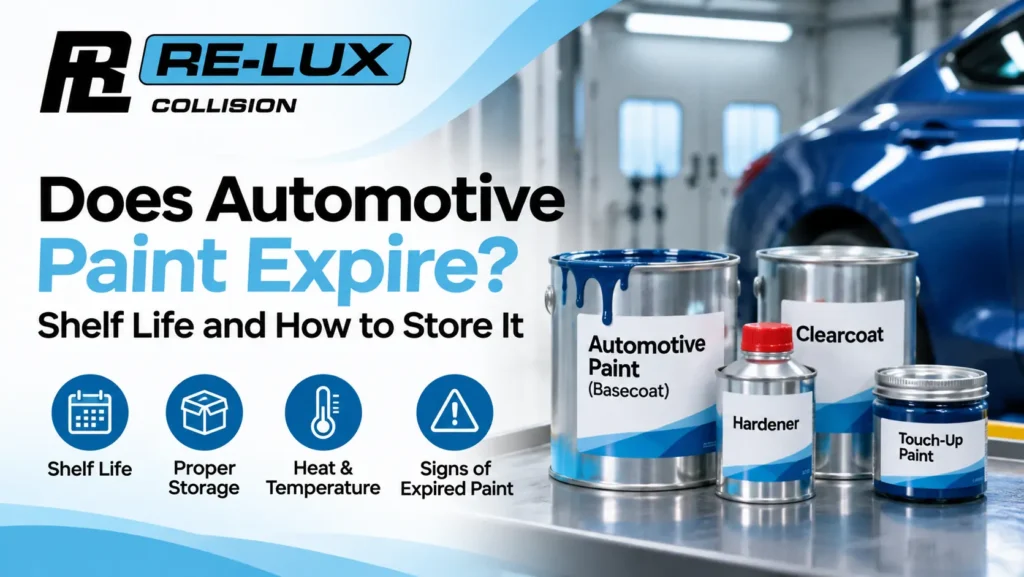
Does automotive paint expire? Yes, automotive paint can expire or degrade over time, even when it has been stored in a sealed container. How long it remains usable depends on the paint type, formulation, and storage conditions. Sealed, unmixed paint generally lasts longer than paint already combined with a hardener or catalyst. Once those components are mixed, the usable window can become much shorter.
If you found an old bottle of touch-up paint or a leftover can in your Sacramento garage, you may wonder whether it is still safe to use. Paint can look normal at first but fail to cure, match, or stick properly. Knowing what to check can save you from creating a bigger paint problem.
How Long Does Automotive Paint Last in Storage?
Automotive paint can remain usable for different lengths of time depending on whether it is sealed, opened, or mixed with a catalyst. There is no universal expiration date that applies to every automotive paint product.
The table below explains how common paint conditions affect storage life and usability.
| Paint Condition | Typical Storage Life | Signs of Deterioration | Main Factors |
|---|---|---|---|
| Sealed, unmixed paint | Generally longer when stored according to manufacturer instructions | Clumping, unusual thickening, permanent separation | Temperature, product age, formulation |
| Opened, unmixed paint | Variable, often shorter than unopened paint | Skin formation, thickening, contamination | Air exposure, moisture, container seal |
| Mixed, catalyzed paint | Usually limited to the manufacturer’s stated pot life | Gelling, thickening, poor application or curing | Chemical reaction, temperature, mixing ratio |
These are general differences, not fixed shelf-life guarantees. Always check the product label or technical data sheet for the manufacturer’s storage limits, expiration information, and mixing instructions.
What Is the Difference Between Unmixed and Catalyzed Automotive Paint?
Unmixed automotive paint generally stores longer because it has not started the chemical curing reaction that occurs when certain products are combined with a hardener or catalyst. Once catalyzed, the mixture must usually be used within a limited period.
Sealed and unmixed paint
Sealed basecoat, clearcoat components, and some touch-up paints may remain usable when stored under the correct conditions. Their shelf life depends on the specific product.
Basecoat provides the vehicle’s color. Clearcoat is the transparent protective layer applied over many modern automotive finishes.
Some products require hardener before application, while others are ready to use or require only a specified reducer. Being unopened does not make paint usable indefinitely.
Mixed paint with hardener or catalyst
Paint mixed with a hardener or catalyst usually has a limited pot life because its chemical curing process has begun. Pot life means the period a mixed product remains suitable for application.
A mixed clearcoat may become too thick to spray or may begin hardening inside its container. Do not try to restore an expired mixture by adding thinner.
Some products can become unusable before obvious thickening occurs. Follow the manufacturer’s stated pot life rather than relying on appearance alone.
How Can You Tell If Automotive Paint Has Gone Bad?
Automotive paint may have gone bad if it has developed lumps, unusual thickness, permanent separation, or changes in color and consistency. These signs can indicate that the product no longer performs as intended.
Common warning signs include:
- Persistent paint separation: Pigments and liquids remain separated after proper mixing according to the product instructions.
- Clumps or gel formation: The paint contains hardened particles or has developed a jelly-like texture.
- Unusual paint thickness: The product has become much thicker than expected or cannot be prepared to the specified application viscosity.
- Color or sheen changes: Properly mixed paint produces a different appearance from the expected finish.
- Improper paint curing: A catalyzed product does not harden correctly when applied under the recommended conditions.
Some pigment settling is normal, especially in paint stored for extended periods. Separation alone does not always mean the paint has expired.
If the product has passed its stated shelf life or shows signs of chemical deterioration, replacing it is safer than testing it on your vehicle.
What Storage Conditions Cause Automotive Paint to Expire Faster?
Heat, moisture, air exposure, and repeated temperature changes can shorten automotive paint’s usable life. Poor storage can damage a product even before its expected expiration date.
For drivers in Sacramento and Elk Grove, summer garage temperatures deserve particular attention. A container stored in a hot garage may experience conditions outside the manufacturer’s recommended range.
To help preserve automotive paint, follow these storage practices:
- Control storage temperature: Keep paint within the manufacturer’s recommended range and away from extreme heat or freezing conditions.
- Seal containers properly: Close approved containers tightly to reduce air exposure and solvent loss.
- Avoid direct sunlight: Store paint away from windows and areas exposed to prolonged sunlight.
- Prevent moisture contamination: Keep containers dry and use clean tools when handling unmixed products.
- Check product labels: Follow the stated storage, safety, and shelf-life instructions for that formulation.
Solvent-based automotive products can also be flammable. Store them away from ignition sources and follow the safety data sheet. Never store mixed two-component products in sealed containers unless the manufacturer specifically permits it.
Does Car Touch-Up Paint Expire?
Car touch-up paint can expire or become unusable, especially after the bottle has been opened repeatedly or stored in poor conditions. Small bottles are convenient for minor scratches, but their contents are still affected by age, air, and temperature.
For example, a touch-up bottle purchased for a small scratch several years ago may have lost solvent or developed pigment settling.
Even if the paint still flows, its color may no longer match as expected. The vehicle’s existing finish can also change from sunlight and weather exposure.
Old touch-up paint can create several problems:
- Poor paint adhesion: Degraded material may not bond properly to the prepared surface.
- Uneven color coverage: Changed consistency or pigment condition can leave visible marks.
- Delayed finish problems: A repair may initially look acceptable but later show peeling, discoloration, or other defects.
For a small DIY repair, check the product instructions and test only where the manufacturer permits. If the paint is visibly degraded or past its recommended shelf life, use fresh material instead.
Why Do Professional Body Shops Use Freshly Mixed Automotive Paint?
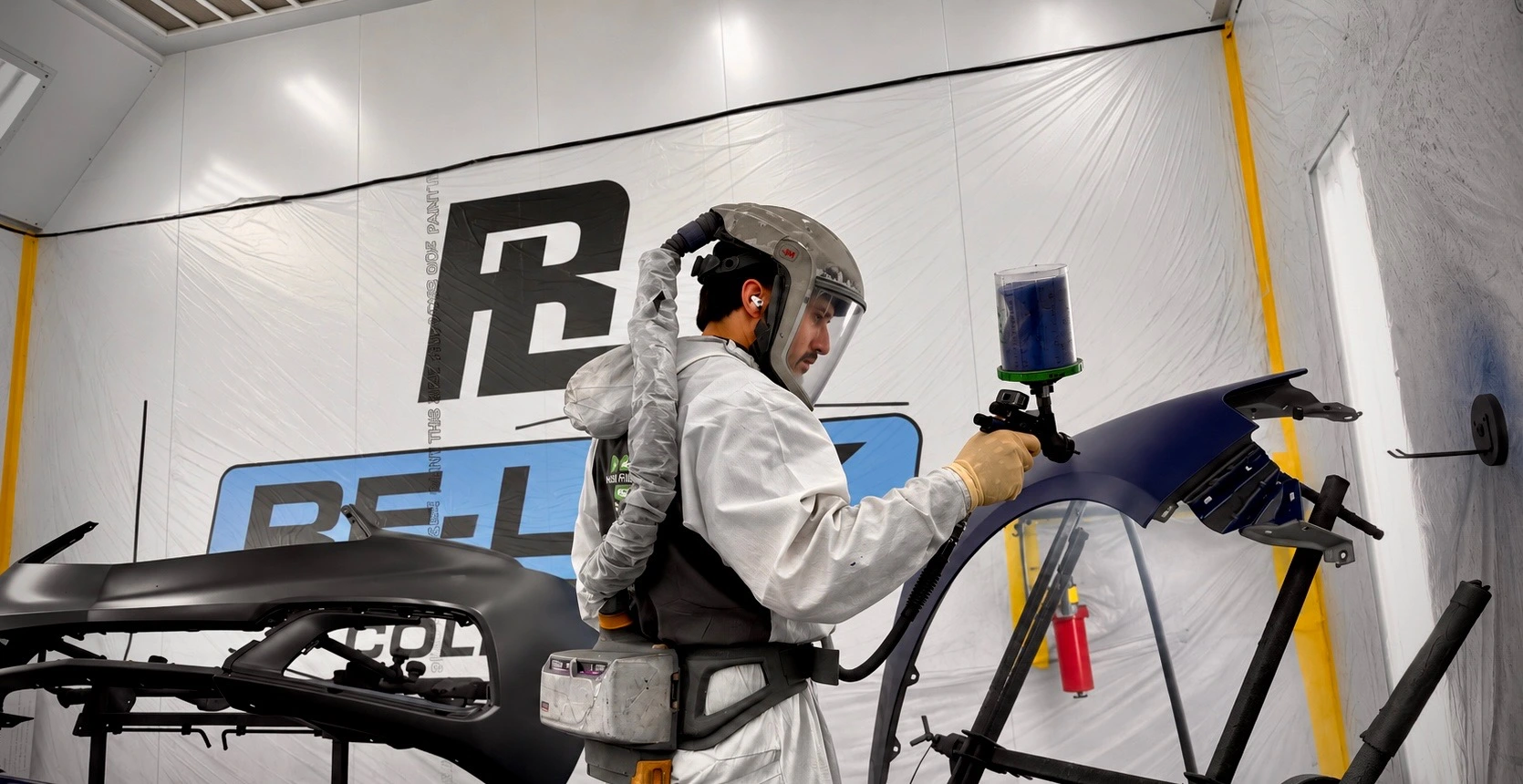
Professional body shops commonly mix paint for the specific repair because fresh, properly prepared material provides more reliable color matching and application results. It also avoids depending on an old container of unknown condition.
A vehicle’s factory paint code provides the starting formula, but the actual color may need adjustment to match its current finish.
For example, two vehicles with the same factory color code can show slight differences because of manufacturing variations, previous refinishing, or environmental exposure.
A technician may use color-matching tools and spray-out samples to check the formula before applying it to the vehicle.
Professional shops also manage their paint inventory according to manufacturer shelf-life requirements. Freshly mixed does not mean every ingredient is newly manufactured. It means the materials are within their usable limits and are prepared for the current job.
If you are interested in how long a properly applied finish lasts outdoors, our article on how long car paint should last covers paint durability after application rather than storage life inside a container.
Frequently Asked Questions
Does automotive paint expire if it is unopened in a Sacramento garage?
Automotive paint can expire even if it is unopened in a Sacramento garage. A sealed container helps preserve the product, but heat and storage conditions still affect its shelf life. Check the manufacturer instructions before using older paint.
Can I use old car touch-up paint in Elk Grove?
You may be able to use old car touch-up paint in Elk Grove if it remains within the manufacturer’s usable limits and has been stored correctly. Check for thickening, clumps, and contamination. Replace paint that shows signs of deterioration.
Does automotive clearcoat expire in Carmichael?
Automotive clearcoat can expire in Carmichael or anywhere else, depending on its formulation and storage conditions. Unmixed clearcoat may remain usable longer than clearcoat already mixed with hardener. Once catalyzed, follow the manufacturer’s pot life.
Can hot weather ruin stored car paint in Folsom?
Hot weather can ruin stored car paint in Folsom if temperatures exceed the product’s recommended storage range. Heat may accelerate chemical changes or solvent loss. A temperature-controlled storage area is generally preferable to a hot garage.
Can separated automotive paint still be used in Rancho Cordova?
Separated automotive paint may still be usable in Rancho Cordova if the separation is normal pigment settling and the material mixes properly according to manufacturer instructions. Permanent separation, lumps, or unusual thickening may indicate deterioration.
Does mixed automotive paint last as long as unopened paint in Sacramento?
Mixed automotive paint generally does not last as long as unopened paint in Sacramento when it contains an activated hardener or catalyst. The curing reaction begins after mixing and limits the usable period. Follow the product’s stated pot life.
Where can I get fresh color-matched automotive paintwork in Sacramento?
You can discuss fresh color-matched automotive paintwork in Sacramento with Re-Lux Collision. A professional assessment can determine the correct paint formula and repair approach for your vehicle. This may be helpful when older touch-up paint is no longer suitable.
Use Properly Stored Paint or Choose a Fresh Color Match
Automotive paint can expire, and its usable life depends on the product, whether it has been mixed, and how it was stored. Sealed, unmixed paint generally lasts longer than catalyzed material, but neither should be used beyond the manufacturer’s recommended limits. If an old bottle has thickened, clumped, or changed noticeably, replacing it is usually the better choice.
If you are unsure whether your stored paint is usable or would prefer a fresh color match, our Sacramento auto body shop, Re-Lux Collision, can help with professional auto paint and scratch repair in Sacramento. We serve Sacramento, Elk Grove, Carmichael, Folsom, Rancho Cordova, and surrounding communities. Call (916) 240-2000 or visit 6580 Asher Ln Ste 300, Sacramento, CA 95828 to discuss your paint concerns and available repair options.