
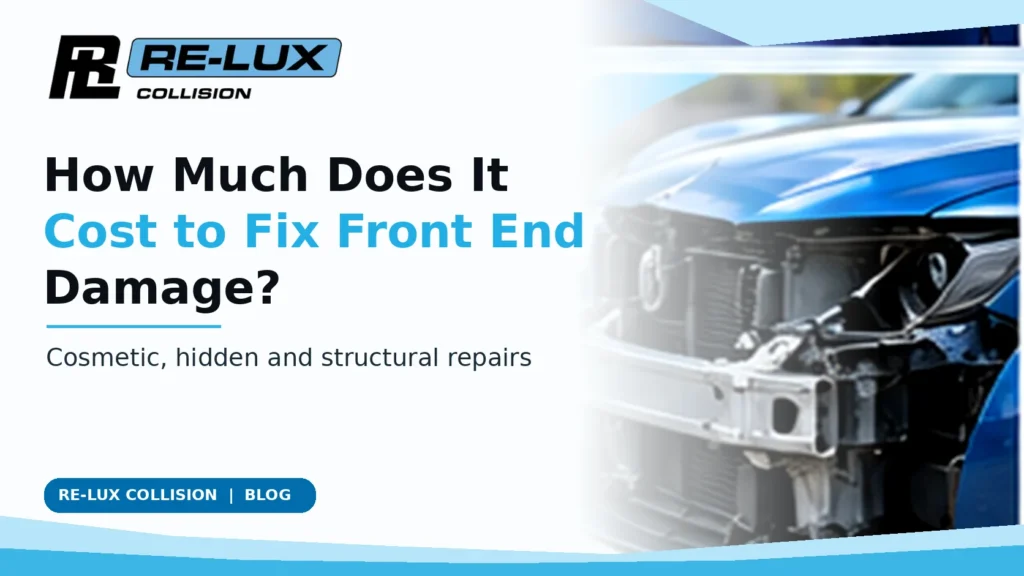
How much does it cost to fix front end damage? The cost varies widely because front-end damage can range from a cracked bumper cover to bent structural components. Cosmetic repairs generally cost less, moderate damage involves more parts and labor, and frame damage is usually the most expensive category. The biggest factor is how far the impact traveled beneath the visible body panels.
If your car was recently involved in a front-end collision in Sacramento, you may be wondering whether the damage is minor or serious. A bumper that looks badly damaged might only need replacement, while a smaller dent could hide problems behind it. Understanding the three levels of damage can help you make sense of your repair estimate.
What Are the Three Levels of Front-End Collision Damage?
Front-end collision damage generally falls into three categories: cosmetic, moderate, and structural. Each category involves different components, repair methods, and labor requirements.
The table below compares what each level typically involves and how it affects repair costs.
| Damage Level | Common Examples | Typical Repair Work | Relative Cost |
|---|---|---|---|
| Cosmetic | Cracked bumper cover, scratched paint, damaged grille | Surface repair, painting, or individual part replacement | Generally lower |
| Moderate | Damaged hood, fender, radiator support, or multiple panels | Panel replacement, component repairs, painting, and alignment | Moderate to higher |
| Structural or frame | Bent frame rails, damaged unibody structure, displaced structural sections | Structural measurement, approved repairs, and possible frame straightening | Generally highest |
These categories are general guides, not fixed pricing levels. A hands-on inspection is needed to determine the actual damage, especially when components behind the bumper may be affected.
How Much Does Cosmetic Front-End Damage Cost to Repair?
Cosmetic front-end damage is generally the least expensive repair category because the damage is limited to exterior parts rather than structural components. Common examples include cracked bumper covers, scratched paint, broken grilles, and damaged trim.
For example, a low-speed parking lot collision in Elk Grove might crack the front bumper cover without damaging the reinforcement or components behind it.
Depending on the damage, the repair may involve:
- Bumper cover repair: Minor scratches or cracks may be repairable if the manufacturer permits the method.
- Grille replacement: Broken plastic grille sections may need replacement without major bodywork.
- Headlight housing replacement: A damaged headlight assembly may require replacement and related checks.
- Paint refinishing: Scratched or repaired surfaces may need preparation, color matching, and clearcoat.
Even cosmetic-looking damage should be inspected for hidden problems. A damaged headlight or sensor-equipped bumper can raise repair costs without any frame damage.
What Makes Moderate Front-End Damage More Expensive?
Moderate front-end damage costs more because the impact affects several body panels or components behind the bumper. The repair often requires replacement parts, additional labor, and more extensive refinishing.
For example, a front-end collision in Carmichael might damage the bumper, hood, fender, and radiator support. The radiator support holds cooling components and may also support headlights or other front-end parts.
Repairs can involve removing several components, checking their mounting points, and replacing damaged parts before reassembly.
Technicians may also need to align the hood and fenders so the panels fit correctly. Painting several panels adds preparation and color-matching work.
Moderate front-end damage does not automatically mean the frame is bent. However, damage to the front support structure or nearby components may require further measurements before the shop can confirm the full repair scope.
How Much Does Structural or Frame Damage Repair Cost?
Structural or frame damage repair is generally the most expensive front-end repair category because it requires specialized measurements, equipment, and manufacturer-approved procedures. The cost depends on which structural sections are damaged and whether they can be repaired or must be replaced.
Frame rails are structural sections that help support the vehicle and manage collision forces. On many modern vehicles, these rails form part of a unibody structure, where the body and frame function together.
A significant front-end impact may bend or distort these sections, even when some exterior panels remain relatively intact.
Structural repairs may involve:
- Computerized frame measurement: Specialized equipment compares structural measuring points with manufacturer specifications.
- Structural straightening: Approved pulling procedures may restore certain damaged sections to specified dimensions.
- Component replacement: Some bent or damaged structural sections must be replaced rather than straightened.
- Final dimensional checks: Technicians verify repaired measurements and inspect the completed work.
Not every frame component can be straightened safely. Repair decisions depend on the vehicle’s construction and the manufacturer’s instructions.
Our guide to collision repair methods for structural frame damage explains these procedures in greater detail.
Can a Car With Front-End Frame Damage Be Repaired?
A car with front-end frame damage can often be repaired when the affected structure has an approved repair method and can be restored to manufacturer specifications. Frame damage does not automatically make a vehicle a total loss.
Modern collision repair shops use computerized measuring systems to identify structural movement and verify repairs.
For example, a vehicle involved in a collision in Folsom may have a damaged front frame rail that can be repaired using an approved procedure. Another vehicle may have damage that requires major structural replacement.
The decision depends on the vehicle’s condition, repair requirements, and overall repair cost.
Insurance companies also consider vehicle value and applicable total-loss rules. For a closer explanation, read our article on whether frame damage automatically means a total loss.
What Hidden Damage Can Increase Front-End Repair Costs?
Hidden damage can significantly increase front-end repair costs because the bumper and grille cover several closely packed mechanical, cooling, and electronic components. These parts may be damaged even when the outside of the vehicle shows only a small impact, which is why a collision diagnostic scan can help confirm what actually needs repair.
Common components that may need inspection include:
- Radiator and cooling components: Impact damage can cause coolant leaks or damage mounting points.
- Air conditioning condenser: The condenser sits near the front of many vehicles and can be damaged by impacts.
- Bumper reinforcement: The structural beam behind the bumper cover may absorb impact forces and require replacement.
- Radar and sensors: Driver assistance components may need inspection, replacement, or calibration after a collision.
- Electrical connections: Damaged wiring or connectors can affect headlights, sensors, and other systems.
For example, a vehicle with a cracked bumper may also have a damaged condenser that is not visible until the bumper is removed.
Newer vehicles may require ADAS calibration services in Sacramento after certain repairs. ADAS stands for Advanced Driver Assistance Systems and includes features such as adaptive cruise control and automatic emergency braking. Calibration is performed when required by the manufacturer’s procedures.
Why Is an In-Person Front-End Damage Inspection Necessary?
An in-person inspection is necessary because the visible damage alone cannot reliably show whether a collision affected the vehicle’s structure or hidden components. Photos may reveal a broken bumper but cannot confirm frame alignment or internal damage.
A technician can inspect the damaged panels, check mounting points, and determine whether additional disassembly or structural measurement is needed.
At Re-Lux Collision, our collision repair services in Sacramento address damage ranging from minor exterior impacts to more involved structural repairs.
For Sacramento and Rancho Cordova drivers, getting an early inspection helps establish the likely repair scope and identify which parts may need further evaluation.
If your vehicle is leaking fluid, has loose components, or may have damaged steering or safety systems, avoid driving it until its condition has been assessed.
Frequently Asked Questions
How much does it cost to fix front end damage in Sacramento?
How much it costs to fix front end damage in Sacramento depends on whether the damage is cosmetic, moderate, or structural. A cracked bumper may require limited repairs, while damaged frame rails require specialized work. An in-person inspection is needed for accurate pricing.
Does front-end damage always mean frame damage in Elk Grove?
Front-end damage in Elk Grove does not always mean the frame is damaged. Many collisions affect only the bumper, grille, headlights, or exterior panels. However, hidden structural damage is possible, so a professional inspection is recommended.
Can a bent frame be repaired in Carmichael?
A bent frame on a vehicle in Carmichael may be repairable using manufacturer-approved structural repair procedures and specialized measuring equipment. Some damaged sections require replacement instead of straightening. The repair method depends on the vehicle and damage location.
Is a car totaled if the front frame rail is damaged in Folsom?
A car with a damaged front frame rail in Folsom is not automatically totaled. The insurer considers the vehicle’s value, repair cost, and applicable total-loss rules. A structural inspection helps establish whether the damage can be repaired safely.
Can a minor front-end collision damage the radiator in Rancho Cordova?
A minor front-end collision in Rancho Cordova can damage the radiator or nearby cooling components, depending on the impact. A cracked bumper may hide a damaged radiator support or condenser. Leaks or overheating after an accident require prompt attention.
How long does front-end collision repair take in Sacramento?
Front-end collision repair in Sacramento may take a few business days for limited cosmetic damage or several weeks for complex structural repairs. Parts availability, insurance approval, and required inspections can affect the schedule. The shop can provide a better estimate after assessing the vehicle.
Where can I get a front-end or frame damage estimate in Sacramento?
You can request a front-end or frame damage estimate in Sacramento from Re-Lux Collision. An in-person assessment helps identify visible damage, possible hidden component problems, and whether structural measurements are needed. The findings help determine the appropriate repair plan.
Find Out How Serious Your Front-End Damage Really Is
Front-end damage repair costs depend on how far the impact extends beneath the exterior panels. Cosmetic damage generally involves less labor, moderate damage may require several components, and structural damage involves specialized repairs. Frame damage is not always a total loss, but the correct repair method depends on the specific vehicle and manufacturer requirements.
If your car has front-end damage, contact our Sacramento auto body shop, Re-Lux Collision, for an in-person inspection to find out which damage category applies to your vehicle. We serve drivers throughout Sacramento, Elk Grove, Carmichael, Folsom, Rancho Cordova, and surrounding areas. Call (916) 240-2000 or visit 6580 Asher Ln Ste 300, Sacramento, CA 95828 to have your vehicle assessed and receive a repair estimate based on the actual damage.