
Should a damaged panel be pulled and worked straight or replaced with a new quarter panel? The answer depends on the metal’s condition, the location of the damage, and the vehicle manufacturer’s repair instructions. Straightening may be appropriate when the panel can safely return to its intended shape. Replacement may be necessary when metal is torn, badly stretched, sharply creased, or damaged at an important structural connection. Neither method is automatically the better choice.
If you received an estimate recommending a new quarter panel, you might wonder why the shop cannot simply push the dent back out. The damage may look manageable from outside, but the metal can behave differently once it has been bent or stretched. Understanding how technicians make this decision helps you ask better questions about your repair.
What Does Pulling and Straightening a Damaged Car Panel Mean?
Pulling and straightening means using specialized tools to reshape damaged sheet metal toward its original form. Technicians carefully move the metal rather than simply covering the dent with filler.
For example, a vehicle involved in a parking lot collision in Sacramento might have a broad dent across its rear quarter panel. If the metal has not been badly stretched or torn, a technician may be able to restore its shape.
Depending on the panel, the repair may involve pulling equipment, hammers, dollies, or other metalworking tools. A dolly is a shaped metal support used behind a panel while the technician works on it.
The technician checks the panel’s shape throughout the process. The goal is to restore its proper contour while avoiding further damage to the metal.
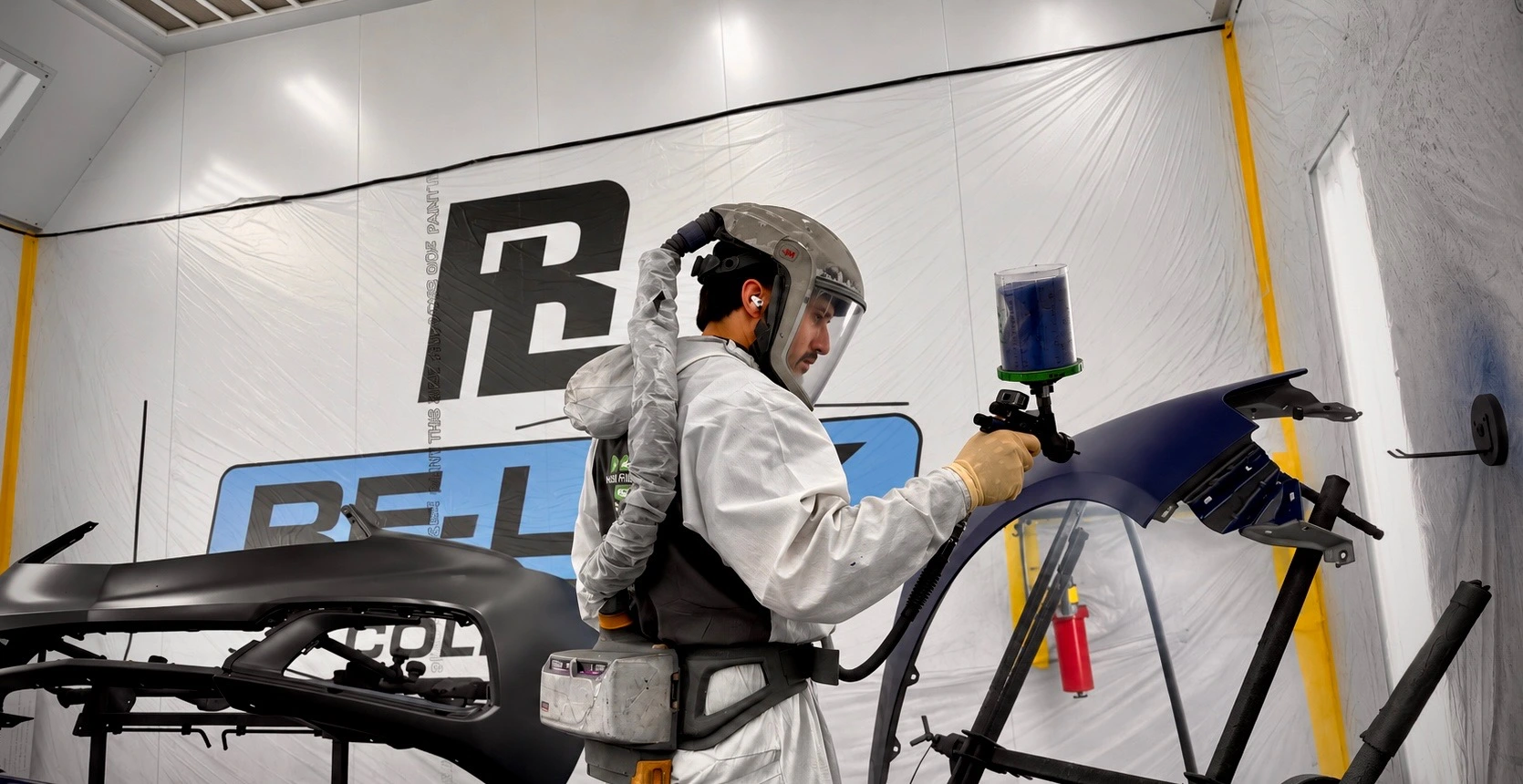
Once the metalwork is complete, the surface may need finishing, primer, and paint to restore its appearance and protection.
When Does Straightening a Car Body Panel Make Sense?
Straightening makes sense when the panel remains repairable under the manufacturer’s procedures and its metal can be reshaped without compromising the required strength or connections. The size of a dent alone does not determine whether this is possible.
For example, a broad, shallow dent on a car door in Elk Grove might look worse than a narrow crease near a welded joint. Yet the broad dent may be more suitable for metal repair.
Signs that may favor straightening include:
- Limited metal stretching: The sheet metal has changed shape without becoming severely thinned or distorted.
- No torn sections: The damaged area has no cracks or tears that would prevent an approved repair.
- Intact panel connections: Welds, seams, and mounting areas remain within acceptable repair conditions.
- Accessible damaged area: Technicians can reach or safely work the affected metal using suitable equipment.
Repairing the existing panel can preserve original factory joints and attachments. This can be valuable on a welded quarter panel, where replacement requires removing and joining a large body section.
However, preserving the original panel only makes sense when its condition meets the vehicle’s repair requirements.
When Should a Damaged Quarter Panel Be Replaced?
A damaged quarter panel should be replaced when its condition makes an approved, lasting repair impossible or when the manufacturer requires replacement. Severe stretching, torn metal, and damage near structural connections can make straightening unsuitable.
Sheet metal changes as it bends during an impact. If the material stretches beyond its ability to return to the intended shape, simply pulling it back may leave excess or weakened metal.
Common replacement considerations include:
- Severely stretched metal: The panel has lost its intended shape and cannot be restored using approved methods.
- Sharp permanent creases: The impact has concentrated damage along a narrow fold, possibly affecting the metal’s condition.
- Tears or cracks: The panel has split, and the damaged area does not qualify for an approved repair.
- Damaged welded seams: The impact affects joints that connect the panel to surrounding body sections.
- Manufacturer replacement requirements: The repair instructions prohibit straightening the affected material or location.
Replacement also requires careful work. A quarter panel is commonly welded or bonded into the body, so technicians must follow the specified cutting, joining, and corrosion protection procedures.
How Do Shops Compare Straightening and Panel Replacement?
Body shops compare straightening and replacement by evaluating metal damage, repair location, structural involvement, and manufacturer instructions. These factors help determine which repair is technically appropriate.
The table below shows common signs that can favor each approach.
| Assessment Factor | Signs Favoring Straightening | Signs Favoring Replacement |
|---|---|---|
| Metal condition | Metal can be restored without unacceptable stretching | Severe stretching, tearing, or material damage |
| Damage shape | Manageable dents or creases within approved limits | Sharp folds or distortion that cannot be properly corrected |
| Damage location | Repairable area away from restricted joints | Damage at seams, welds, or restricted repair zones |
| Structural involvement | Repair is permitted for the affected section | Structural damage requires replacement under factory procedures |
| Manufacturer instructions | Approved straightening method is available | Replacement is specified for the damage or material |
This comparison is a guide, not a diagnosis. A hands-on assessment is needed to confirm which conditions apply to your vehicle. Repair time and cost must also be evaluated for the actual damage.
Why Does Structural Quarter Panel Damage Need Extra Attention?
Structural quarter panel damage needs extra attention because some rear body sections help support the vehicle and manage collision forces. Damage near their connections can affect more than appearance.
Unlike many front fenders, rear quarter panels are commonly joined to surrounding body sections. Their relationship with the wheelhouse, rear body structure, and nearby pillars varies by vehicle.
For example, a sideswipe in Carmichael could damage the outer quarter panel and the inner wheelhouse behind it. Repairing only the visible dent would not address the hidden problem.
Modern vehicles may also use high-strength steel or other materials with strict repair limits. Some materials cannot be heated or straightened using methods suitable for conventional steel.
For structural damage, the shop must follow the manufacturer’s approved repair procedures rather than relying only on the panel’s appearance.
How Does a Body Shop Decide Whether a Panel Is Repairable?
A body shop decides whether a panel is repairable by inspecting its shape, material condition, attachment points, and surrounding structure. The technician may need to remove trim or take measurements before making a final recommendation.
The assessment can include checking panel gaps, looking for hidden creases, and comparing damaged areas with the opposite side of the vehicle.
Technicians also review manufacturer repair information to identify limits on pulling, straightening, sectioning, or replacement.
Sectioning means removing and replacing a permitted portion of a panel rather than the entire assembly. It is only appropriate where the vehicle manufacturer allows the procedure.
On some repairs, technicians may perform limited metalworking to evaluate how the damage responds. They should not use trial-and-error straightening where it conflicts with required procedures.
For Sacramento drivers, a detailed assessment provides a better basis for comparing repair recommendations than photographs alone.
Does Replacing a Panel Always Cost More Than Straightening It?
Replacing a panel does not always cost more than straightening it because labor, parts, and repair complexity vary with the vehicle and damage. A difficult metal repair may require extensive work, while some replacement panels are relatively straightforward to install.
A front fender, for example, is often bolted on. A rear quarter panel usually requires more involved joining work.
Both methods may require refinishing. The repaired or replaced area needs suitable surface preparation and paintwork to match the surrounding finish.
Re-Lux Collision offers auto paint and scratch repair services in Sacramento for exterior finish damage that requires professional refinishing.
If your damage involves a bumper instead, our guide on when a bumper needs replacement rather than repair explains a similar decision for a different type of component.
What Should You Ask About a Repair or Replacement Recommendation?
You should ask the shop which damage conditions and manufacturer instructions support its recommendation. A clear explanation helps you understand why the chosen method suits your vehicle.
For example, if an estimate in Folsom recommends replacing a rear quarter panel, ask whether the metal is torn, stretched, or damaged near a structural seam.
You can also ask whether the technician found hidden damage and what procedures will restore the affected areas.
A shop should be able to explain its approach in plain language without expecting you to understand every technical term.
At Re-Lux Collision, our collision repair services in Sacramento address damaged body panels and accident-related repairs. An assessment can help identify the appropriate work for your vehicle.
Frequently Asked Questions
Should a damaged quarter panel be straightened or replaced in Sacramento?
A damaged quarter panel in Sacramento should be straightened or replaced based on the metal’s condition, damage location, and manufacturer repair instructions. An inspection can determine whether the existing panel can be restored safely or needs replacement.
Can a dented quarter panel be pulled straight in Elk Grove?
A dented quarter panel in Elk Grove can sometimes be pulled straight when the metal remains suitable for repair. Severe stretching, tears, or restricted structural areas may prevent this approach. The shop must inspect the damage first.
Does a sharp crease mean a new panel is needed in Carmichael?
A sharp crease on a car panel in Carmichael does not automatically mean replacement is necessary. However, deep folds can stretch or damage the metal. The crease location and manufacturer repair limits determine whether straightening is appropriate.
Is replacing a quarter panel safer than repairing it in Folsom?
Replacing a quarter panel in Folsom is not automatically safer than repairing it. Either method can be appropriate when performed according to manufacturer instructions. The safest option depends on the damaged material and structural connections.
Can a body shop repair stretched metal in Rancho Cordova?
A body shop in Rancho Cordova may be able to repair some stretched metal, depending on the material and degree of damage. Severely stretched or weakened sections may require replacement. Manufacturer procedures guide the decision.
Will quarter panel replacement affect factory welds in Sacramento?
Quarter panel replacement in Sacramento often requires removing and recreating specified factory-style joints. Technicians must use approved joining and corrosion protection procedures. This is one reason welded panel replacement requires careful planning.
Where can I get a panel repair assessment in Sacramento?
You can request a panel repair assessment from Re-Lux Collision in Sacramento. A technician can inspect the visible damage and identify whether additional checks are needed. The shop can then explain the recommended repair or replacement approach.
Choose the Repair Method That Fits the Damage
The decision to straighten or replace a damaged body panel depends on the metal’s condition, the location of the damage, and the vehicle manufacturer’s requirements. Straightening can preserve a repairable original panel, while replacement may be necessary when damage makes proper restoration impossible. Neither method should be chosen simply because it appears easier.
If your vehicle has a damaged quarter panel, fender, or door, contact our Sacramento auto body shop, Re-Lux Collision, for an assessment that explains the reasoning behind the recommended repair. We serve Sacramento, Elk Grove, Carmichael, Folsom, Rancho Cordova, and surrounding communities. Call (916) 240-2000 or visit 6580 Asher Ln Ste 300, Sacramento, CA 95828 to discuss your vehicle’s damage and available repair options.