
What is refinishing phase collision repair? It is the stage when a body shop prepares, primes, paints, and clear-coats repaired vehicle surfaces after the main bodywork is complete. Refinishing restores the vehicle’s color, appearance, and protective paint layers. It generally happens after structural and body repairs but before final reassembly and quality inspection.
If your car is being repaired in Sacramento and the status update says refinishing, you may wonder how much work is left. The dents may already be fixed, but the vehicle still needs several carefully controlled painting steps before it is ready. Understanding those steps helps explain why refinishing takes time.
Where Does Refinishing Fit in the Collision Repair Process?
Refinishing takes place after the damaged body panels have been repaired or replaced and before the vehicle’s final reassembly and inspection. It is the stage that restores the finish after technicians complete the underlying repairs.
For example, if your car was damaged in a collision in Elk Grove, the shop may first remove the bumper, repair a dented fender, and replace broken mounting components. The repaired surfaces then move into refinishing.
The general collision repair sequence includes:
- Damage assessment: Technicians inspect the vehicle and determine which repairs are needed.
- Disassembly and bodywork: Damaged components are removed, repaired, or replaced.
- Surface refinishing: Repaired areas are prepared, primed, painted, and clear-coated.
- Final reassembly: Removed trim, lights, and other components are installed again.
- Quality and safety checks: The shop inspects the completed work and performs required system checks.
Some vehicles require additional steps depending on the damage. For the bigger picture, read our guide to the collision repair process in Sacramento.
What Are the Main Steps in Automotive Refinishing?
Automotive refinishing follows a planned sequence of surface preparation, priming, color application, clear coating, and curing. Each step prepares the surface for the next one and affects the final appearance.
Here is what happens during the main refinishing stages.
| Refinishing Stage | What Happens | Why It Matters |
|---|---|---|
| 1. Surface preparation | Sand, clean, and mask the repair area | Creates a smooth, clean surface for painting |
| 2. Primer | Apply suitable primer to prepared areas | Supports adhesion, surface leveling, and corrosion protection |
| 3. Base coat | Apply the matched vehicle color | Restores the original appearance |
| 4. Clear coat | Apply the transparent protective finish | Provides gloss and protects the color layer |
| 5. Curing | Allow the paint system to harden under specified conditions | Develops the finish needed for handling and reassembly |
These stages describe a typical modern basecoat and clearcoat system. Specific products may require additional steps or different procedures. The paint manufacturer’s instructions determine how each material is applied and cured.
What Happens During Surface Preparation?
Surface preparation removes defects and contamination so primer and paint can bond properly to the repaired panel. This stage includes sanding, cleaning, and protecting surrounding areas from overspray.
After a collision repair, the surface may contain sanding marks, repaired dents, or transitions between old and new materials.
Technicians smooth these areas and remove dirt, grease, and other contamination before painting. They also use masking materials to protect glass, trim, and surfaces that should remain unpainted.
Preparation is especially important because new paint does not hide every surface defect. Poor sanding or contamination can show through the final finish.
A properly prepared surface gives the primer a suitable foundation.
Why Is Primer Applied Before Automotive Paint?
Primer prepares repaired surfaces for painting by supporting adhesion, filling minor surface imperfections, and providing corrosion protection when the correct products are used. The primer system depends on whether the underlying material is steel, aluminum, plastic, or an existing finish.
For example, a repaired metal fender may need a corrosion-resistant primer followed by a surfacer. Primer surfacer helps level small sanding marks before the color is applied.
Technicians may sand the cured primer to create a smooth surface for the basecoat.
Not every repair requires the same primer products. Using compatible materials in the correct order helps prevent adhesion problems and early finish failure.
How Does a Body Shop Match and Apply the Base Coat?
A body shop matches the base coat using the vehicle’s factory paint code, color formulas, and adjustments needed to match the existing finish. The basecoat is the layer that provides the vehicle’s visible color.
For example, a silver vehicle from Carmichael may have slight differences between its current finish and the original factory formula. Sun exposure, earlier paint repairs, and factory color variations can affect matching.
Technicians may use color measurement equipment or spray-out samples to check the match before application.
Why is paint blending sometimes needed?
Paint blending helps reduce visible color differences between a repaired panel and the surrounding original finish. It involves gradually applying color into an adjacent area when the repair and paint system call for it.
Metallic and pearl finishes can be especially sensitive to application technique and viewing angle.
Blending helps the repaired section look consistent with the rest of your vehicle rather than standing out as a newly painted panel.
What Happens During Clear Coating and Curing?
Clear coating adds a protective transparent layer over the basecoat, while curing allows the applied paint system to develop the properties needed for handling and service. Both steps are necessary parts of a typical modern refinishing process.
Clearcoat provides gloss and helps protect the color against weather, sunlight, and normal exposure.
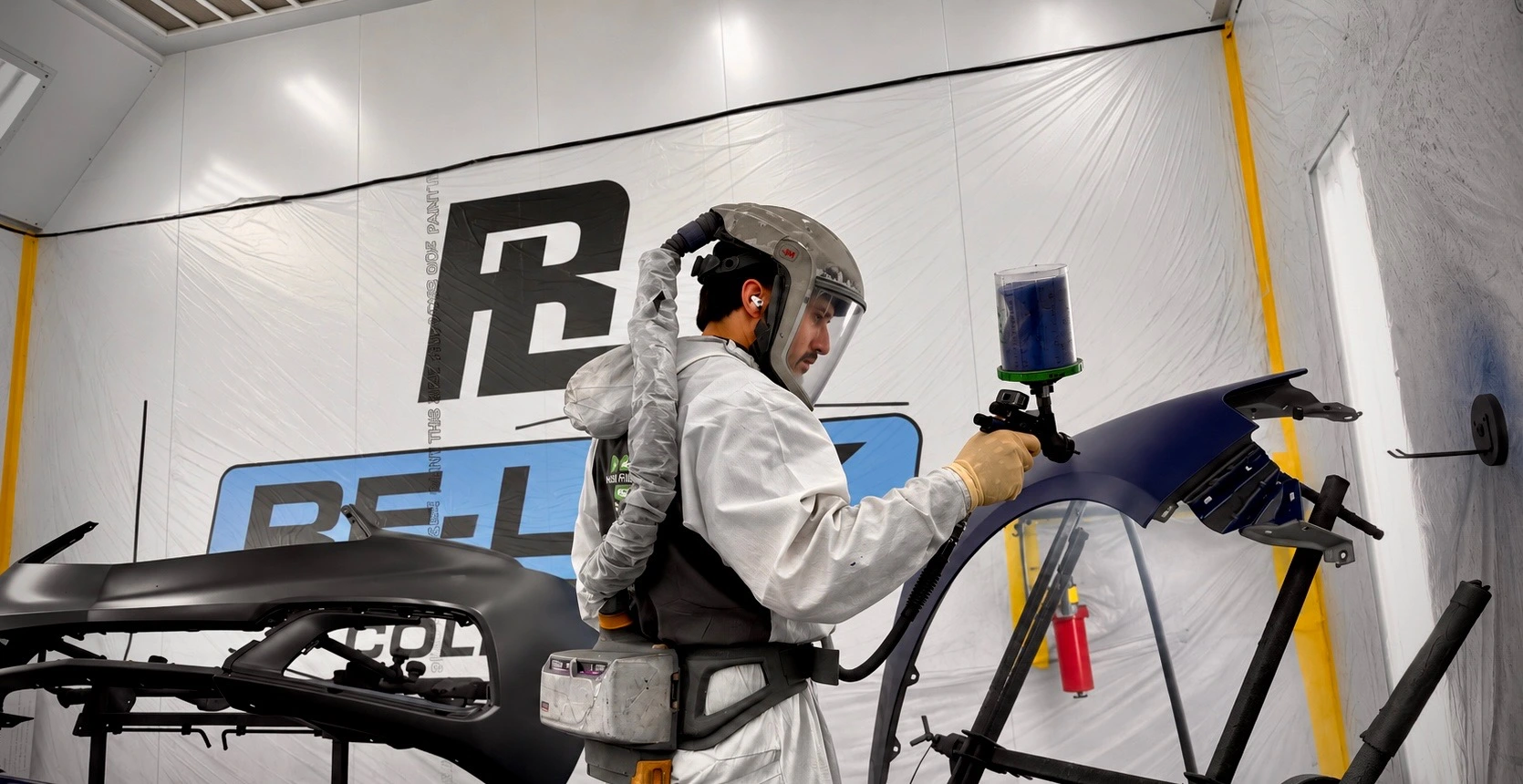
After applying clearcoat, technicians follow the paint system’s curing requirements. The process may use controlled temperatures and airflow inside a spray booth.
A paint booth provides a controlled environment for spraying and, when equipped for it, curing automotive finishes.
The paint must reach the manufacturer’s required handling or assembly condition before components are reinstalled. Full chemical curing may continue after the vehicle leaves the shop.
This is why freshly painted surfaces may still require special washing and care instructions after pickup.
Why Can’t the Refinishing Phase Be Rushed?
The refinishing phase cannot be rushed because each coating needs the correct preparation, flash time, and curing conditions before the next step. Skipping these requirements can affect both appearance and durability.
Flash time is the waiting period that allows solvents or water to leave an applied coating before another layer is added.
Applying materials too quickly or under unsuitable conditions can contribute to problems such as:
- Poor paint adhesion: Coatings may fail to bond properly when surfaces or application steps are incorrect.
- Trapped solvents: Paint may develop bubbles, pinholes, or other finish defects.
- Uneven surface appearance: Incorrect application can create dull areas, texture differences, or inconsistent gloss.
- Premature finish failure: Improper preparation or curing can contribute to peeling and reduced durability.
A shop following the paint manufacturer’s procedures is protecting the quality of the repair, even when the vehicle already looks finished.
Does Refinishing Mean Your Car Is Almost Ready?
Refinishing generally means your vehicle has moved past the main body repair stage, but it does not mean pickup is immediately next. The paint must be ready for handling, and the vehicle still needs reassembly and final checks.
For example, a car repaired after a collision in Folsom may still need headlights, trim, and bumper components installed after painting.
Depending on the vehicle and repair, the shop may also need to complete electronic scans, wheel alignment checks, or safety system calibration.
For a broader explanation of these final steps, read our article on what collision repair includes.
When your status says refinishing, ask whether the car is being prepared for paint, painted, or waiting for the next assembly stage. That gives you a clearer understanding of its progress.
Frequently Asked Questions
What is the refinishing phase of collision repair in Sacramento?
The refinishing phase of collision repair in Sacramento is when a shop prepares, primes, paints, and clear-coats repaired body panels. It restores the vehicle’s finish after bodywork. Reassembly and final inspections generally follow.
Does refinishing mean my car is almost done in Elk Grove?
Refinishing means your car in Elk Grove has generally completed its main bodywork, but additional steps remain. The paint must be ready for reassembly, and final inspections or calibration may still be needed before pickup.
Why does collision repair refinishing take time in Carmichael?
Collision repair refinishing takes time in Carmichael because sanding, priming, painting, and curing must follow the correct sequence. Each coating needs suitable application and drying conditions. Rushing can affect the final finish.
Is primer always necessary during collision refinishing in Folsom?
Primer is necessary during collision refinishing in Folsom when the repair surface and paint system require it. Bare metal, repaired filler, and certain plastics may need different primer products. The correct approach depends on the substrate and manufacturer instructions.
Why does my repaired car need paint blending in Rancho Cordova?
Your repaired car in Rancho Cordova may need paint blending because the new color can differ slightly from the surrounding finish. Blending helps create a smooth color transition, particularly with metallic and pearl paint.
Can I wash my car immediately after refinishing in Sacramento?
Washing your car immediately after refinishing in Sacramento depends on the paint system and the shop’s instructions. Fresh paint may need special care while curing continues. Ask your repair shop when normal washing and other paint treatments are permitted.
Where can I ask about my vehicle’s refinishing status in Sacramento?
You can ask Re-Lux Collision about your vehicle’s refinishing status in Sacramento if your car is being repaired there. The shop can explain whether preparation, painting, curing, or reassembly is underway and discuss the remaining work.
Understand What Happens Before Your Car Is Ready
The refinishing phase restores your vehicle’s painted finish after collision-related bodywork is complete. Surface preparation, primer, basecoat, clearcoat, and curing each serve a specific purpose. Once refinishing is complete, the vehicle moves through the remaining assembly and quality checks before delivery.
If you have questions about your vehicle’s repair status or want to understand the refinishing work involved, contact our Sacramento auto body shop, Re-Lux Collision. Our collision repair services and auto paint and scratch repair services serve drivers throughout Sacramento, Elk Grove, Carmichael, Folsom, Rancho Cordova, and surrounding areas. Call (916) 240-2000 or visit 6580 Asher Ln Ste 300, Sacramento, CA 95828 to discuss your vehicle and the repair process.